Vesak Poya, the full moon of May, is the holiest date in Theravada Buddhism — simultaneously marking the birth, enlightenment and passing into parinirvana of the Buddha. In Sri Lanka it is celebrated with a warmth and public generosity that surprises most visitors who expect a solemn religious occasion and instead find something closer to a joyful street festival.
In the days leading up to Vesak, towns across the country fill with thorana — elaborate illuminated panels, sometimes several storeys tall, depicting scenes from the Buddha's life and the Jataka tales of his previous existences. These are community projects: neighbourhoods, businesses and schools compete to build the most intricate and beautiful displays, drawing crowds of admirers well into the night.
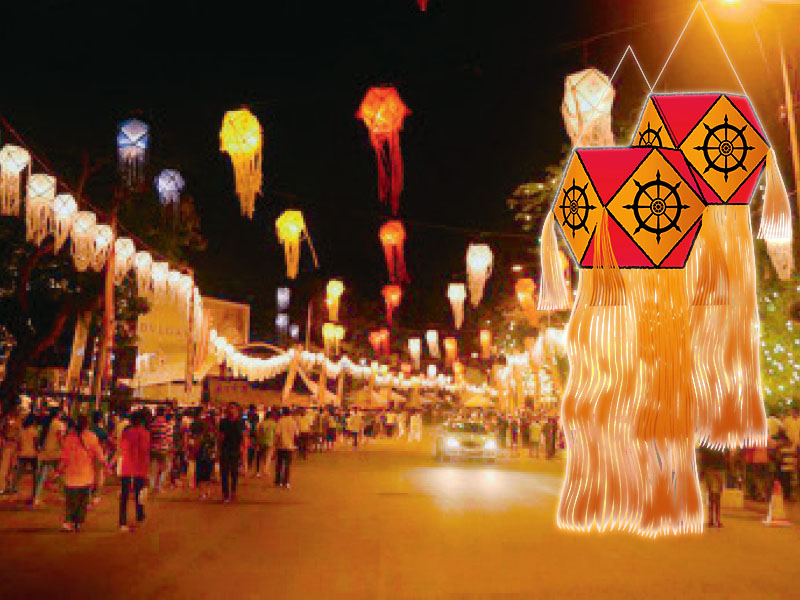
Households hang vesak kudu — white paper lanterns lit from within — from their verandahs, creating soft glowing lines along every street. The effect in a traditional town or village neighbourhood, after dark, is genuinely beautiful.
Most characteristic of all is the culture of dansala — voluntary roadside stalls where food and drink are distributed entirely free of charge to anyone who passes. Tea, rice, string hoppers, sweets, cordial: volunteers work through the night feeding strangers with no expectation of anything in return. It is one of the most direct expressions of Buddhist merit-making in Sri Lankan daily life, and participating in it — accepting a cup of tea handed through a window — is an entirely genuine, unpretentious experience.
Vesak is the best single day of the year to see Sri Lanka's Buddhist culture at its most openly joyful. Plan to be out after dark, walk rather than drive, eat everything offered to you, and carry small change for the donation boxes at the temples you pass.