Among the quieter but more remarkable discoveries in Sri Lankan archaeology is a cluster of ancient iron-smelting sites in the hill country, where craftsmen built furnaces specifically designed to catch the seasonal monsoon wind and use it, rather than bellows, to drive smelting temperatures high enough to produce genuine steel.
The discovery
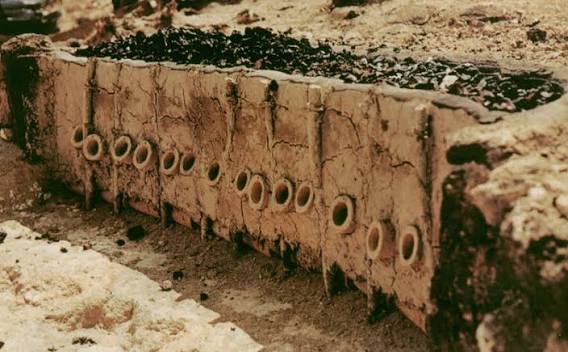
Excavations led by archaeologists working in the region around Samanalawewa, in the hills near Adam's Peak, uncovered rows of furnace remains positioned along ridgelines exposed to prevailing monsoon winds. The furnaces were oriented deliberately, their air intakes facing the direction from which the strongest seasonal winds blow, allowing natural airflow to feed the fire rather than requiring constant manual bellows work.
This is a genuinely clever engineering solution. Smelting iron into steel requires sustained high temperatures and a controlled supply of oxygen; getting that airflow right, at scale, without mechanical assistance, using nothing but the geography and the wind, represents a sophisticated understanding of both metallurgy and the local climate.
Producing high-carbon steel, not just iron
What makes the find particularly significant is the quality of the product. Analysis of slag and metal residues from these sites indicates the furnaces were capable of producing high-carbon steel - a much harder, more useful and more difficult-to-produce material than plain iron. Researchers involved in the excavations have argued that this wind-powered technique may have been supplying steel that made its way into the broader ancient trade networks connecting South Asia to the Middle East, where it could plausibly have contributed to the reputation of high-quality "Indian steel" mentioned in some ancient and medieval sources - though this connection remains a subject of ongoing scholarly discussion rather than settled fact.
Dating and context
The sites are associated with a period roughly in the first millennium CE, placing this steel production well before comparable European techniques for producing steel at scale, which did not mature until much later. The scale of the operation - many furnace sites clustered together rather than one or two isolated examples - suggests organised, sustained production rather than a one-off experiment, likely feeding both local demand for tools and weapons and longer-distance trade.
Part of a wider pattern
This discovery fits into a broader picture of ancient Sri Lankan engineering sophistication that extends well beyond religious architecture and irrigation. The same civilisation that built the bisokotuwa valve towers to control water pressure in giant reservoirs, and that raised brick stupas taller than anything in Europe at the time, was also solving metallurgical problems using an equally elegant application of natural forces - in this case, reading the monsoon wind and building infrastructure to exploit it precisely.
It is a useful corrective to any assumption that pre-colonial Sri Lankan technology was limited to religious monuments. Metalworking, hydraulic engineering and agricultural science developed together, supporting a civilisation capable of the kind of infrastructure that still astonishes visitors and researchers today.
Seeing the evidence
The furnace sites themselves are research locations rather than developed visitor attractions, and are best appreciated through the archaeological literature and museum displays on ancient Sri Lankan technology, including material held at the Colombo National Museum. But knowing this history adds a useful layer to a visit anywhere in the hill country: the same slopes that grow tea today, and that pilgrims climb on the way to Adam's Peak, were once lined with furnaces converting iron ore into steel using nothing but fire, ore and a carefully chosen ridge in the path of the wind.