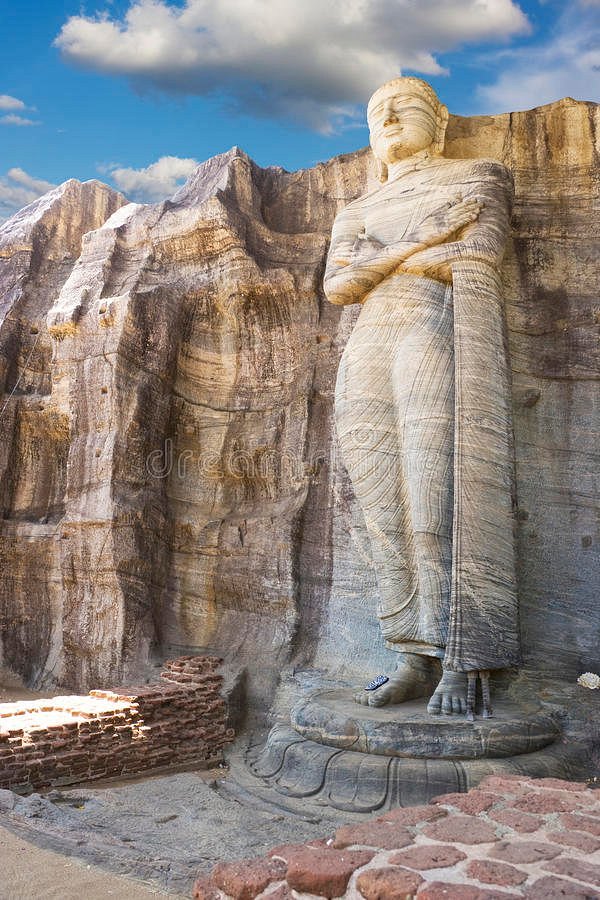
Gal Vihara is the reason many people make the journey to Polonnaruwa, and it justifies the journey completely. A single natural granite outcrop was shaped by 12th-century sculptors into four distinct Buddha figures of monumental scale — a seated meditating figure, a smaller figure in a decorated rock cavity, a standing figure with crossed arms, and a reclining figure just over fourteen metres long — all from the same continuous face of stone.
The reclining Buddha is the one people photograph. But stand in front of the standing figure first. It is seven metres tall, and the sculptors used a slightly darker natural band running through the rock for the decorative border of the robe. The arms are crossed at the chest in a posture associated with mourning rather than the usual hand gestures, and scholars still debate whether this represents grief at the death of the disciple Ananda, depicted in the adjacent reclining figure, or a distinct iconographic tradition.
The reclining figure itself rewards close, slow attention. The pillow under the head is subtly compressed under its weight. The upper foot is positioned fractionally behind the lower one, giving the body a naturalness that surprises you in a stone figure of this age. The face is calm in the way that transcends sculptural convention and crosses into something harder to name.
All four figures were carved under the patronage of Parakramabahu I during the 12th-century golden age of Polonnaruwa. The site is a UNESCO World Heritage property and is fenced, with a concrete walkway running past the figures. Come early to share it with as few people as possible. The light from the north-west in late afternoon crosses the faces at an angle that shows the carving at its most three-dimensional.