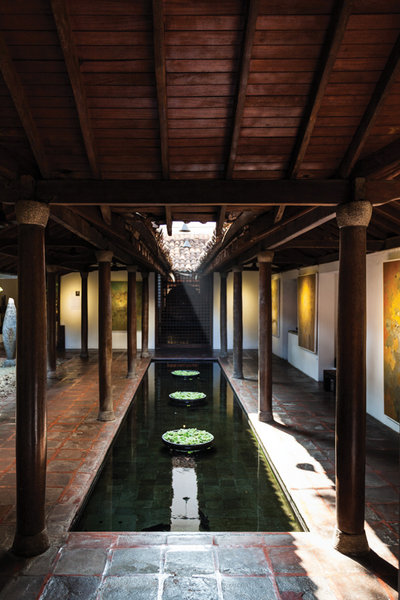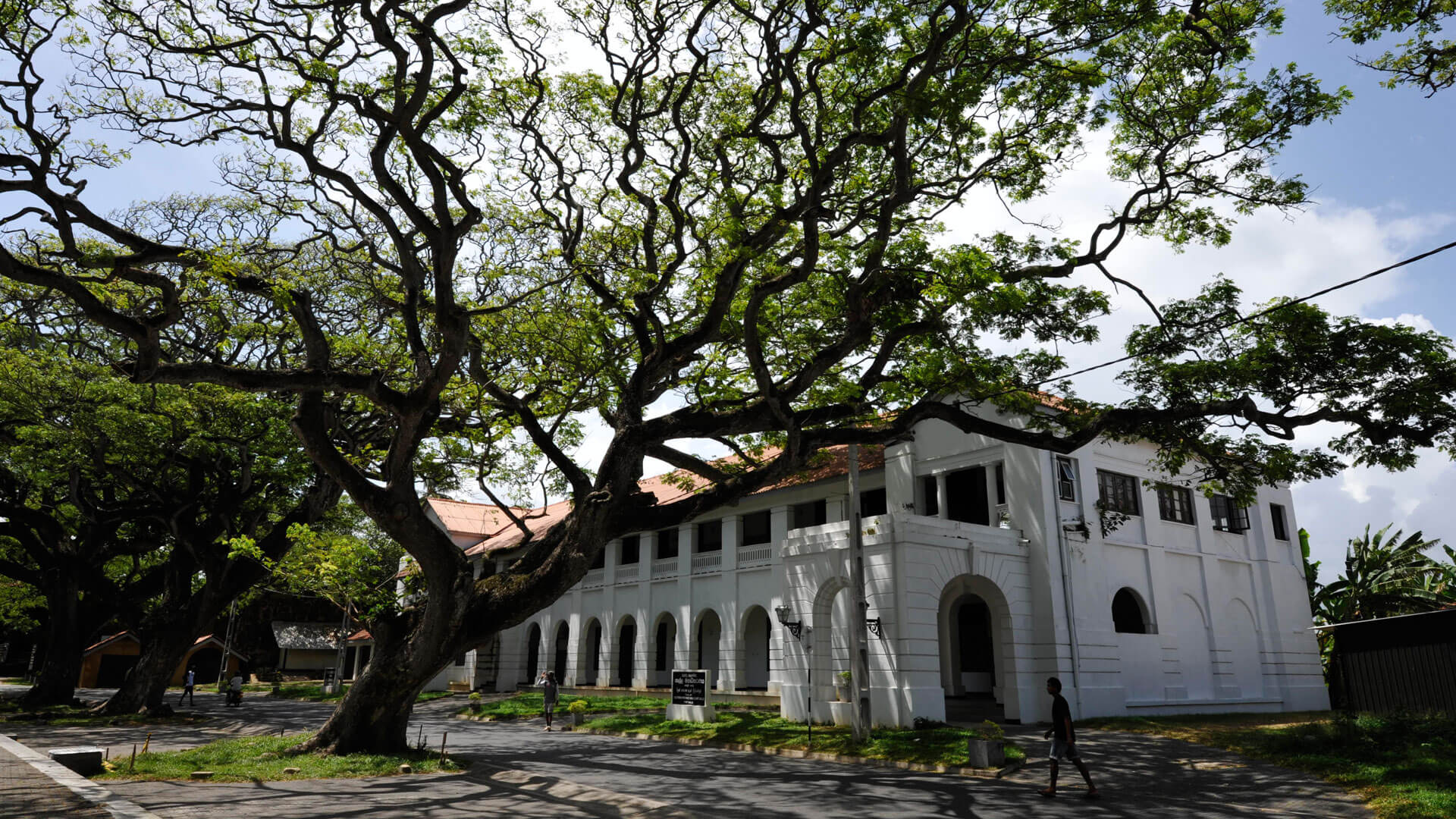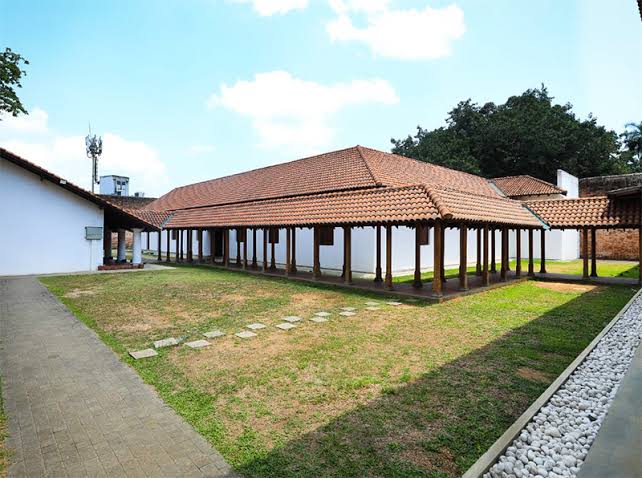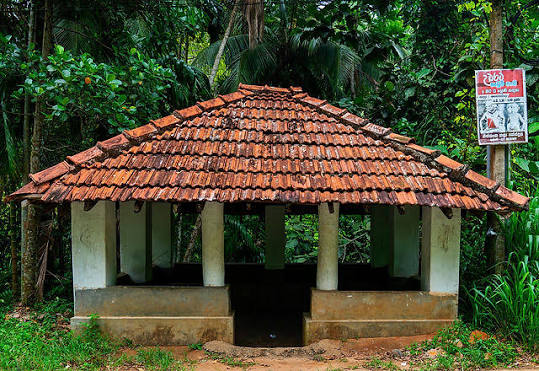
One of the more charming and least-discussed pieces of Sri Lankan architectural heritage is the ambalama — a wayside rest shelter built along traditional travel routes throughout the island. These small, open pavilions of stone, brick and timber were built and maintained as acts of public merit by local chiefs, guilds and wealthy families, available to any traveller of any background who needed shade and a place to rest.
The classic ambalama form is simple and effective: a raised stone or brick platform, open on all sides, with a timber column structure supporting a tiled or thatched hipped roof. Seating is built into the platform at varying levels — a practical response to the caste conventions of pre-modern Sri Lanka, where people of different social positions sat at different heights, but designed to accommodate everyone under the same roof.
The best-preserved examples date from the Kandyan period and are found scattered along old roads through the central highlands, often at crossroads or near streams where travellers would have naturally paused. Some are elaborately carved; others are completely plain, their beauty entirely in the proportion of roof to platform and the way they sit in their landscape — turned just so to catch the prevailing breeze, positioned to command a view down the road in both directions.
The ambalama tradition reflects something important about the moral economy of pre-modern Sri Lanka: the understanding that providing shade and rest for a stranger was a meritorious act, and that public infrastructure was a religious as much as a civic obligation. Maintaining the road, planting the shade tree, building the rest house — these were the kinds of acts recorded in inscriptions alongside temple endowments and tank constructions, and taken equally seriously.
Several well-preserved examples can be found along old pilgrimage routes in the central highlands, and the Colombo National Museum holds documentation of many others. They are easy to overlook, but once you learn to spot them, you start finding them everywhere.