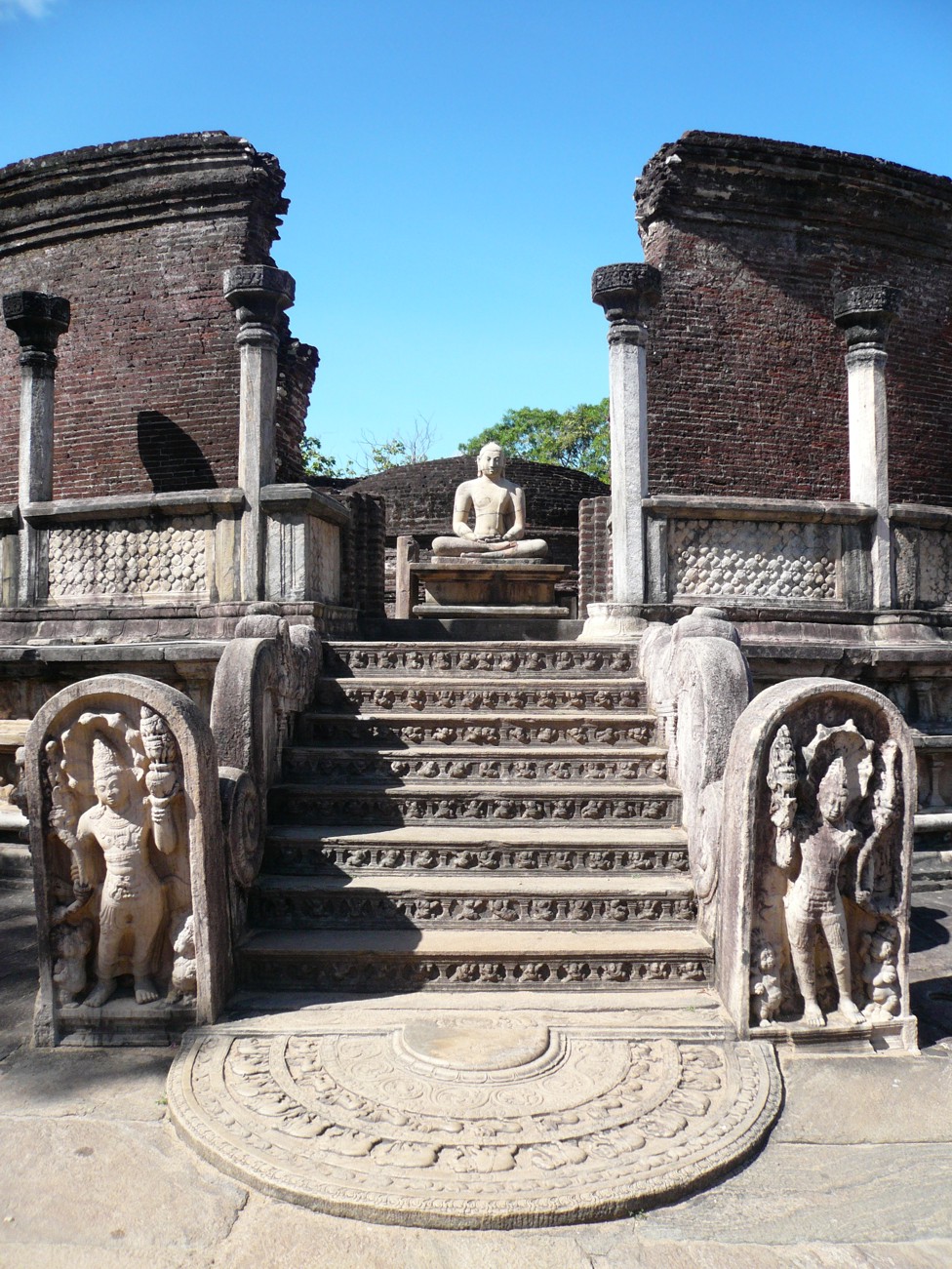
The Vatadage at Polonnaruwa is not a large building. The circular platform it stands on measures around eighteen metres in diameter, and the remains of three concentric rings of stone columns — once supporting a timber and tile roof — rise from it without drama. But in the subtlety of its proportions, the refinement of its carved details and the quality of its moonstone, the Vatadage is considered by many architectural historians to be the most accomplished building Sri Lanka produced in the medieval period.
A vatadage is a round relic house: at its centre stands a small stupa housing sacred relics, and the stone columns surrounding it supported a tiered wooden roof that would have covered the entire precinct. All the roofs in Sri Lanka's ancient buildings have long since returned to earth — only stone survives — but the column rings at Polonnaruwa are complete enough to reconstruct the original interior space in the mind.
Four flights of steps give access from the cardinal directions, each flanked by guardstones and preceded by a moonstone. The northern moonstone is the one most visitors linger at: it is considered the finest of the Polonnaruwa period, deeply and crisply carved despite nearly nine centuries of exposure. The animal procession — elephants, horses, lions, and the sinuous vine band — runs in perfect rhythm around its circumference.
Four seated Buddha images face outward from the central platform, their posture varying by direction. The whole composition — four Buddhas, four staircases, four sets of guardstones, a circular form reflecting the completeness of the cosmos — is so precisely worked out that it rewards standing at the centre and slowly turning a full circle before you leave.